 PT
 EN
Two-way vs PoC
Difference between two-way radio and PoC radio
A two-way radio talks radio to radio on UHF or VHF, without the internet. PoC talks over a data network. They are two systems, not two bands.
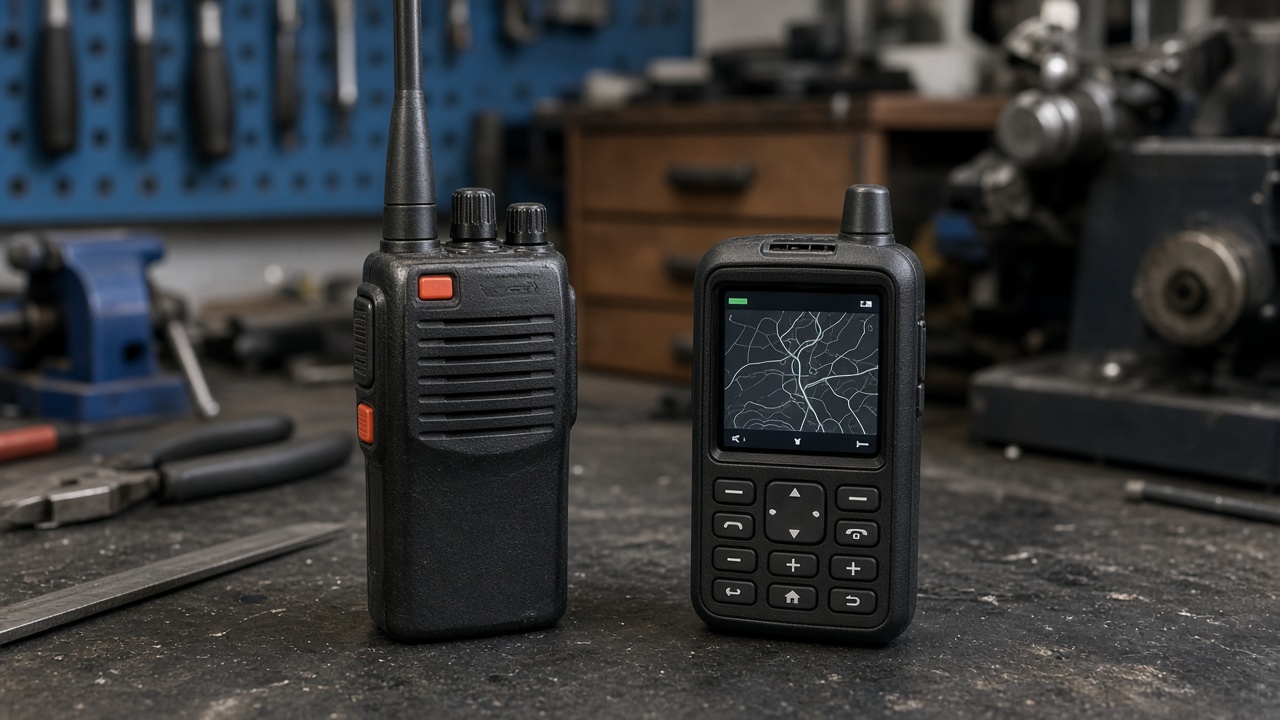
Two-way radio and PoC radio are two ways to PTT. The difference is not the brand. It is the path the audio takes to the other set.
Palo Security supplies both — handhelds, vehicle sets and base stations. PoC lines include Hytera, Inrico, ICOM, Caltta and Kirisun. Two-way lines include Hytera, Motorola, ICOM, Caltta and Kirisun. Quantity and type are set in the quote.
Two-way radio
A two-way radio talks radio to radio, or through a repeater on site. It uses an authorised UHF or VHF frequency. It does not need the internet, a SIM or Wi-Fi. Range depends on the terrain, the antenna and, if there is one, the repeater.
UHF or VHF is the band inside this system. Band choice is in the article on the difference between UHF and VHF.
PoC radio
PoC (Push-to-Talk over Cellular) does not use the site UHF or VHF channel. PTT travels over a data network: a SIM card or Wi-Fi, including Wi-Fi from a Starlink antenna. While data is up, the call can link distant posts or a post in the field. With no data, PTT does not leave the set.
IP radio is the same path
A request may say IP radio, LTE radio or PoC radio. Those names point to the same kind of system: audio travels over a data network, not over the site channel. It is not a third system between two-way and PoC. ICOM calls it IP radio; Hytera, Inrico, Caltta and Kirisun use PoC for the same role. The quote closes the path, not the label on the sheet.
It is not a mobile phone
On a phone someone has to answer. On a PoC radio PTT opens the group and the audio comes out of the speaker or earpiece. The button is on the set; nobody hunts for an icon on a screen. A phone app does not close the same request: the patrol carries a radio with PTT, a battery and the group in the service.
Licensing
A two-way radio uses a UHF or VHF channel. That frequency is authorised at the country’s regulator. Power and the band are not copied from another market’s licence-free band. With no authorisation, the site has no channel. That step sits apart from the quote for the sets.
PoC — IP radio — does not use that channel. PTT travels on the operator SIM or on Wi-Fi. It does not take the site’s UHF or VHF channel licence. It takes an account in the PoC service and, if it uses the operator, a data plan. Those are two roles: one is the radio channel; the other is the service and the data.
A site that already has an authorised frequency and only needs to extend the compound stays on two-way. A site that still has no channel and needs to talk across sites can go PoC without waiting for band authorisation — it still needs the account and the data. When both systems sit in the same request, authorisation stays with two-way; PoC closes the service.
The two side by side
- Two-way: local frequency, no internet. Suits the site, a short patrol and a perimeter with a repeater. The frequency is authorised at the regulator.
- PoC (IP radio): SIM or Wi-Fi. Suits distant posts, several sites and a site with no repeater. It does not use the site UHF or VHF channel licence; it uses the service account and data.
- They do not talk on the same channel. A UHF two-way set does not join a PoC group, and the reverse is also true.
- Many operations use both: two-way on site, PoC to a control room at another site.
- The request can be one set per system, or a kit that does both paths. That closes in the quote, not in an invented model.
How to choose
- One site, reception and patrol inside the same wall, with a frequency authorised or to be authorised: two-way radio (then close UHF or VHF).
- No authorised channel yet and the call must leave the site: PoC.
- A control room at another site, several posts, a convoy or a field with no repeater: PoC.
- No mobile tower and no Wi-Fi: not PoC; that is satellite radio.
The article on benefits and disadvantages of PoC sets out what PoC gains and what it costs. Tell us the terrain, the number of radios and whether the call must leave the site. We prepare the quote.
Need this for the team?
Tell us the quantity and the site. We prepare the quote.
More articles
 Cameras
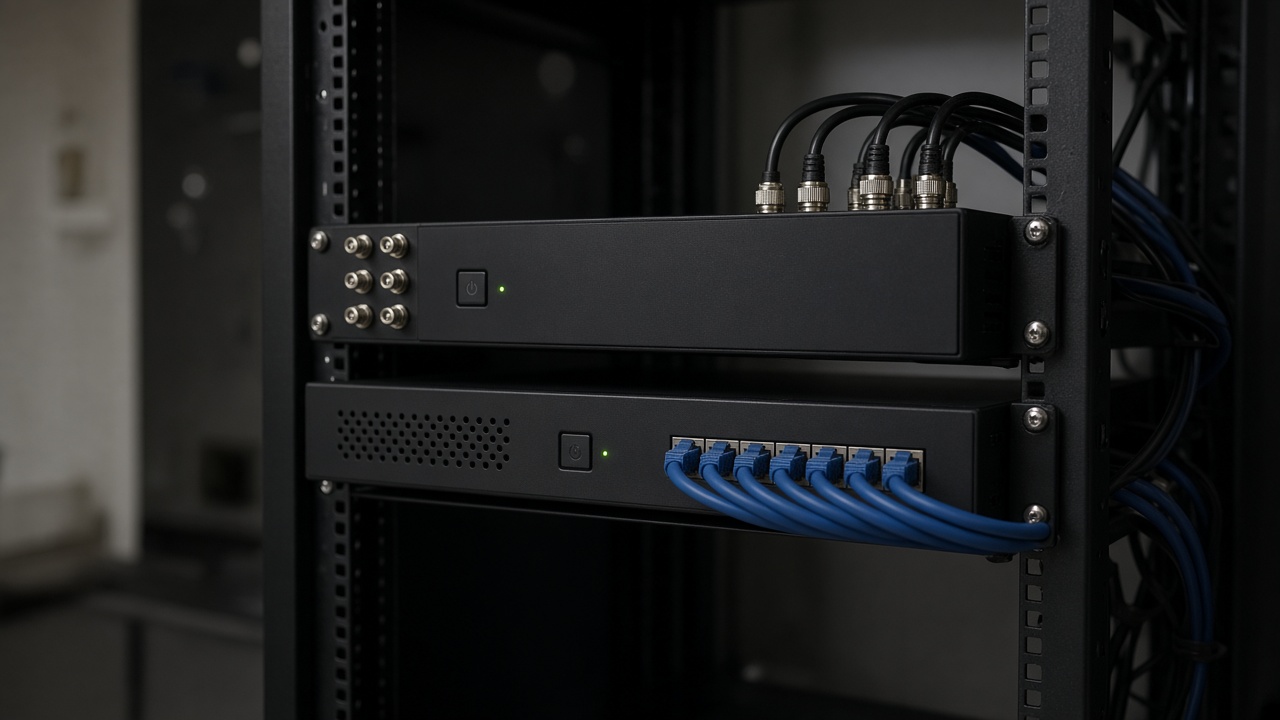
Difference between DVR and NVR
A DVR stores the cameras wired to the unit. An NVR records IP cameras on the site network. They are two recorders, not the same box under another name.
 Cameras
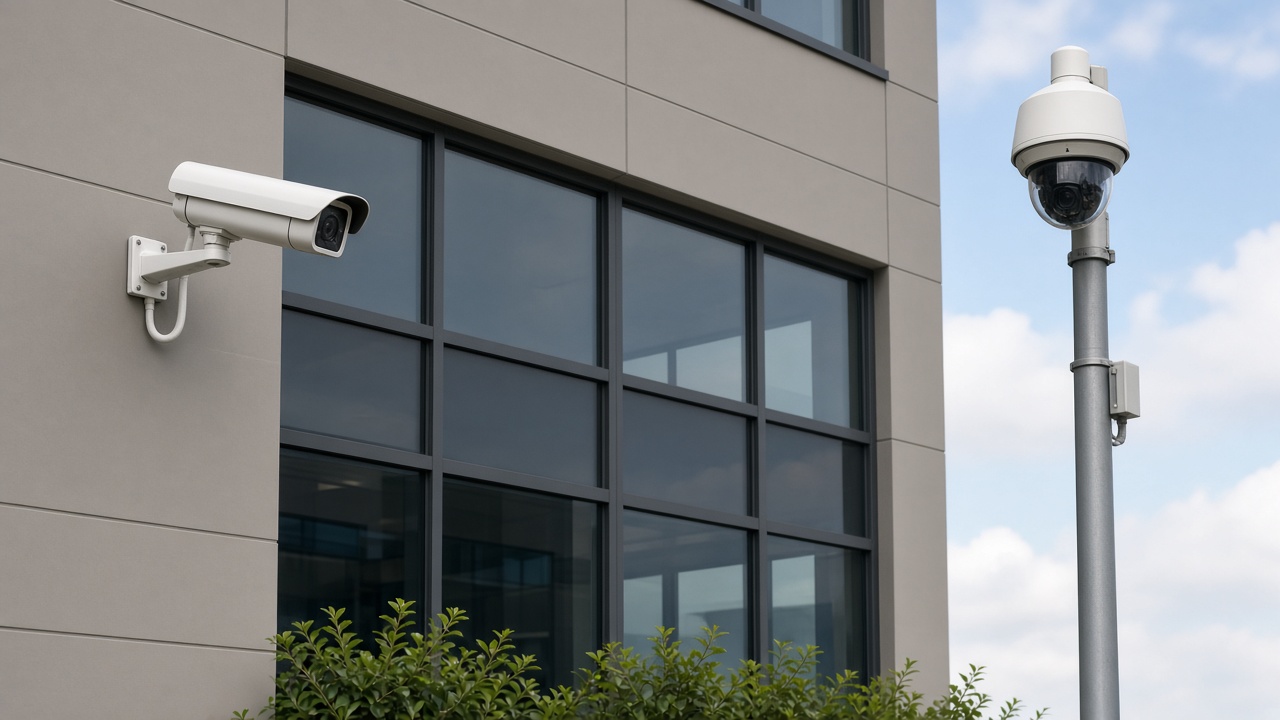
Fixed camera vs PTZ
A fixed camera covers one view: the door, the corridor, the gate. A PTZ pans and zooms across a wide area. One does not replace the other across the whole site.
 Perimeter
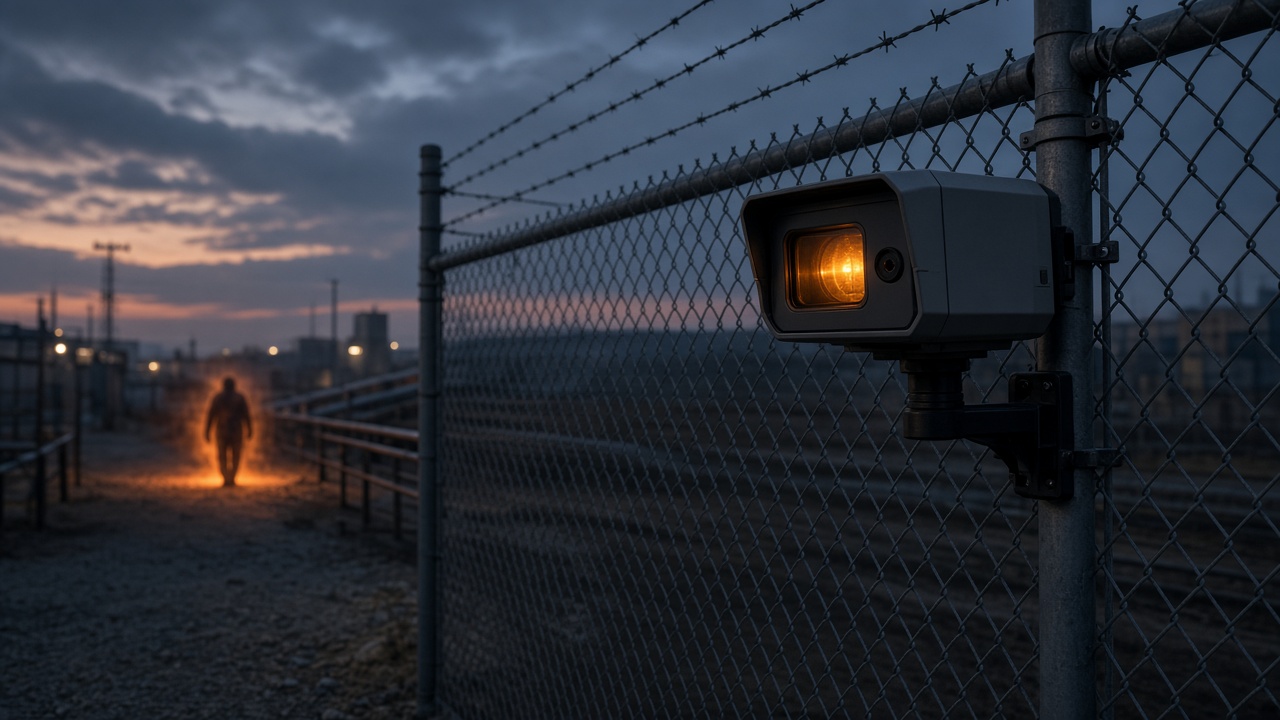
Thermal camera on the perimeter
A thermal camera sees heat when the light does not reach. It does not replace the camera that needs to identify a face in colour. On the perimeter the two roles are different.